Life and Death on Pheasant Breeding Farms
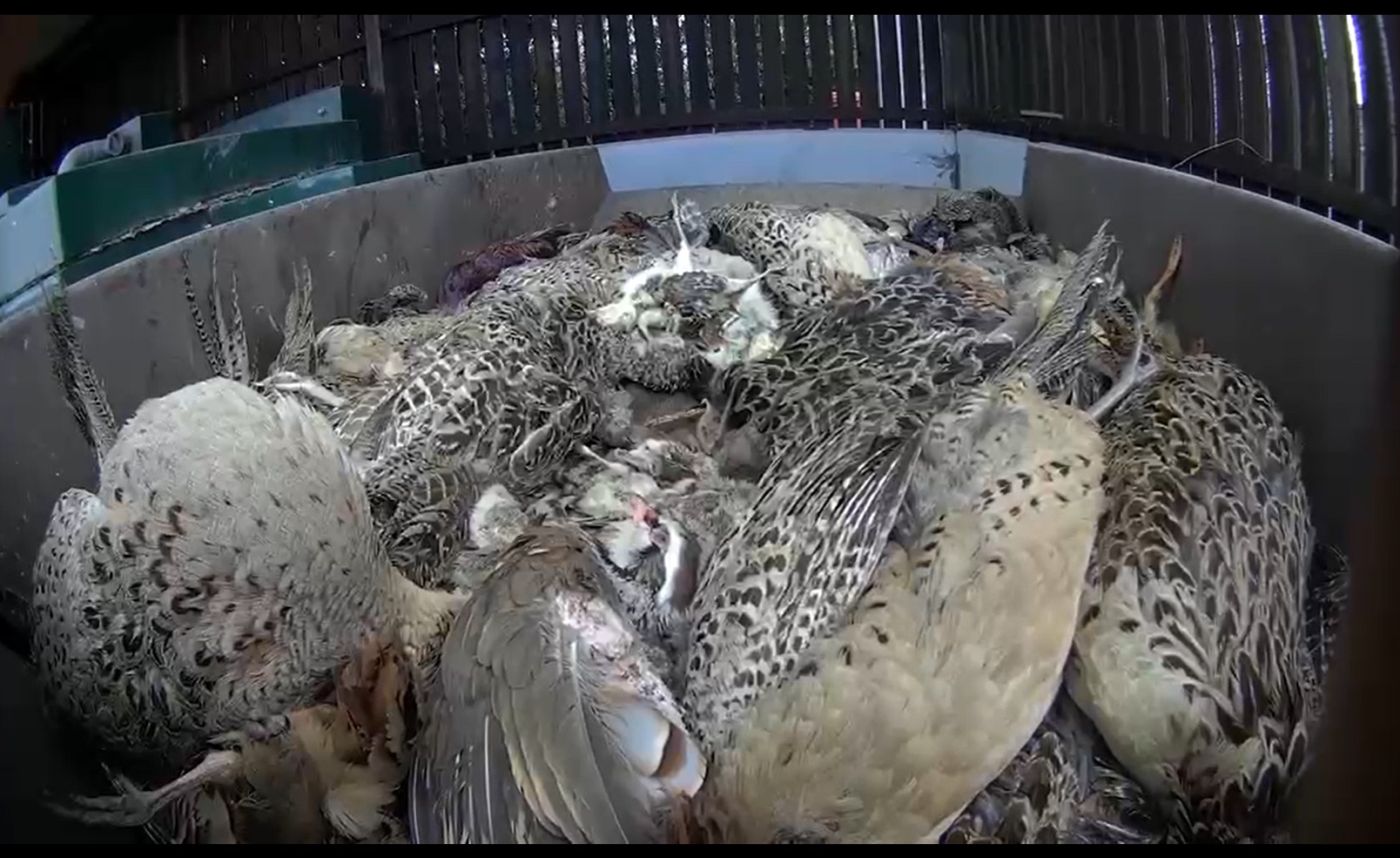 ‘Dead Week’: The Birds Who Are Used Up
Each year, millions of pheasants are bred and released for “recreational” shooting. A recent undercover investigation by Protect the Wild, in the United Kingdom, has drawn attention to the breeding farms that supply pheasants for shooting estates. Footage aired by ITV News shows breeding pheasants confined in wire cages alongside dead and injured birds. Protect the Wild also documents pheasants wearing beak guards and “spectacles” that inhibit their natural behavior. According to workers interviewed during the investigation, some farms experience a recurring period of increased mortality among breeding hens during the peak egg-laying season, informally referred to as “dead week.”
The May 6, 2026, ITV News article reports:
An undercover worker said: “I saw shocking things. A bird had a damaged
leg and when this was brought to the attention of one of the workers, he
literally just said, 'well, you know, as long as she can still lay an
egg, don't worry about it.'
“It's literally a case of breeding as many birds as possible to survive for as long as possible to be sold and then shot.”
In the wild, a hen pheasant lays a clutch of eggs in a carefully chosen nest and then stops laying while she incubates the eggs and raises her chicks. If the nest is destroyed, she may lay again, but her reproductive cycle normally alternates between laying and caring for offspring.
On game farms, eggs are collected daily and transferred to artificial incubators, preventing hens from completing the natural cycle of incubation and chick-rearing. As a result, hens continue laying for many weeks, producing about 4–6 times more eggs than the 10–14 eggs in a typical wild clutch. A study of breeding pheasants housed in commercial-style cages found significant physiological changes throughout the laying season, including metabolic stress, reductions in red blood cell measures, changes in blood proteins, and other biochemical changes. Combined with confinement and crowding, this prolonged laying period pushes breeding hens far beyond what they would naturally experience.
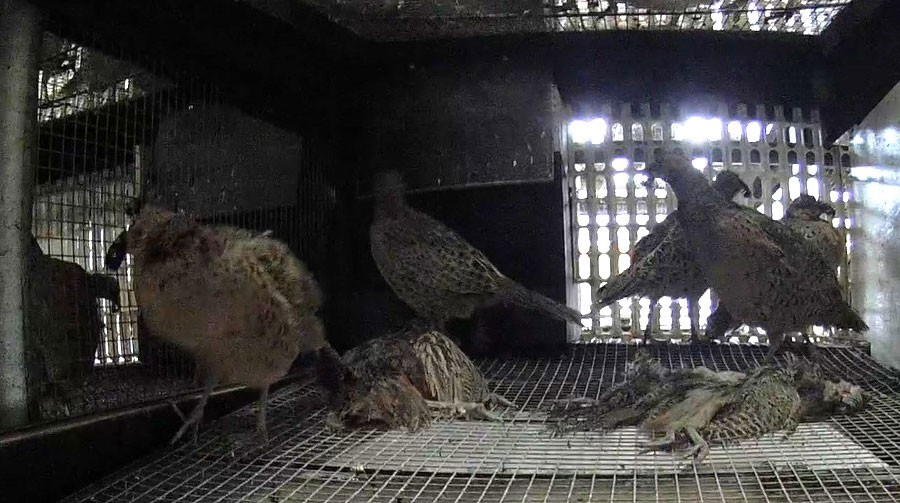
Undercover Investigation by Protect the Wild
In the sadistic “sport” of pheasant hunting, the suffering of pheasants begins on the breeding farms where the birds are intentionally bred and captive-raised for the sole purpose of being released into fields to satisfy people who take pleasure in pursuing, injuring, and killing them for “recreation.”
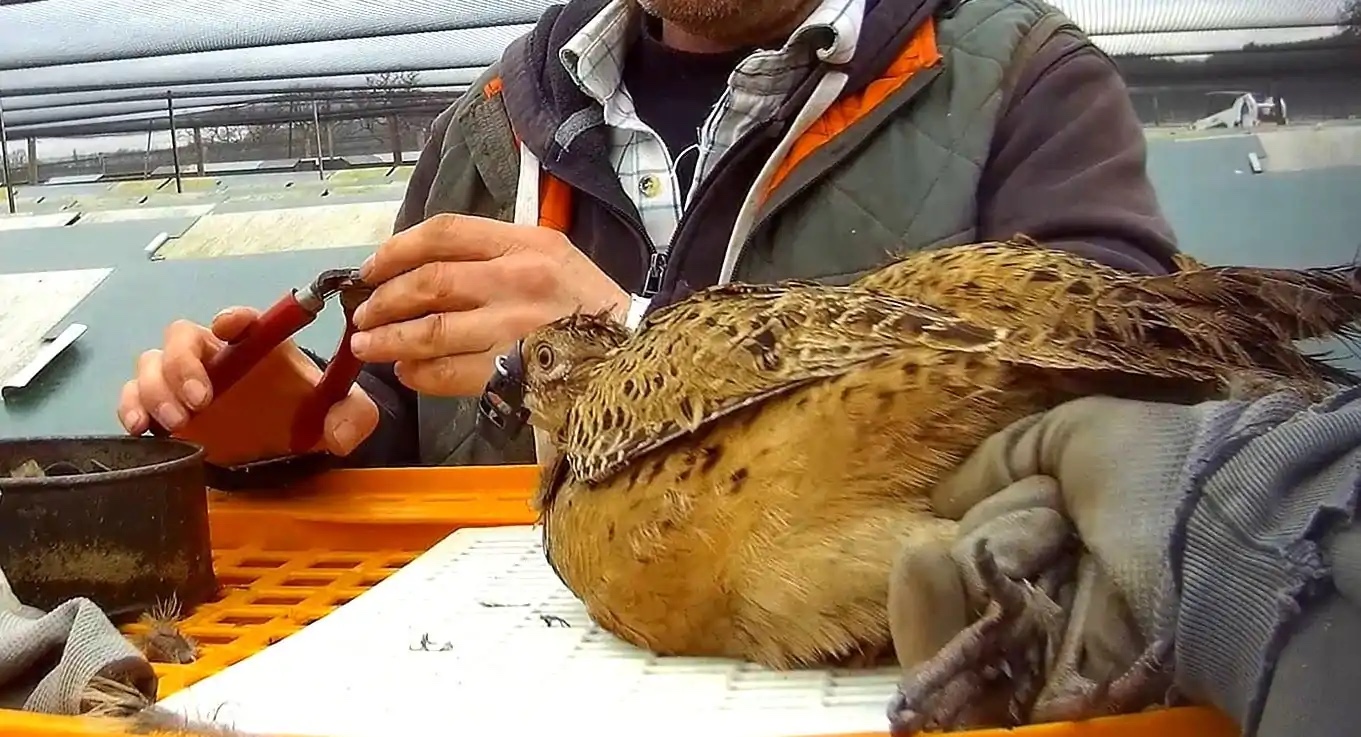
Pinned Down and Terrified—Beak Guard Fitting: The Procedure The Industry Doesn’t Want You To See
What Can I Do?
-
In the United States, many pheasants used for hunting are intentionally bred and captive-raised by state wildlife agencies and private game farms before being released for shooting programs and hunts. The Committee to Abolish Sport Hunting (C.A.S.H.) is calling for action to oppose the New York Department of Environmental Conservation’s proposed 2026–2035 pheasant stocking plan, which states that its goal is to increase hunter recruitment, retention, and reactivation through pheasant stocking. The deadline to submit your comments is July 25, 2026. Please email the Department of Environmental Conservation at Wildlife@dec.ny.gov with the subject “Pheasant Plan.” Tell them that you oppose the proposed pheasant stocking plan and urge them to prioritize habitat restoration and genuine wildlife conservation instead of breeding birds solely to be hunted.
-
In the United Kingdom, Protect the Wild has investigated pheasant breeding farms and is campaigning to end bird shooting through public education, investigations, and advocacy. Please join them and share their investigations: ‘Dead Week’: The Birds Who Are Used Up and Pinned Down and Terrified—Beak Guard Fitting: The Procedure The Industry Doesn’t Want You To See
Learn more:
United Poultry Concerns - Pheasants
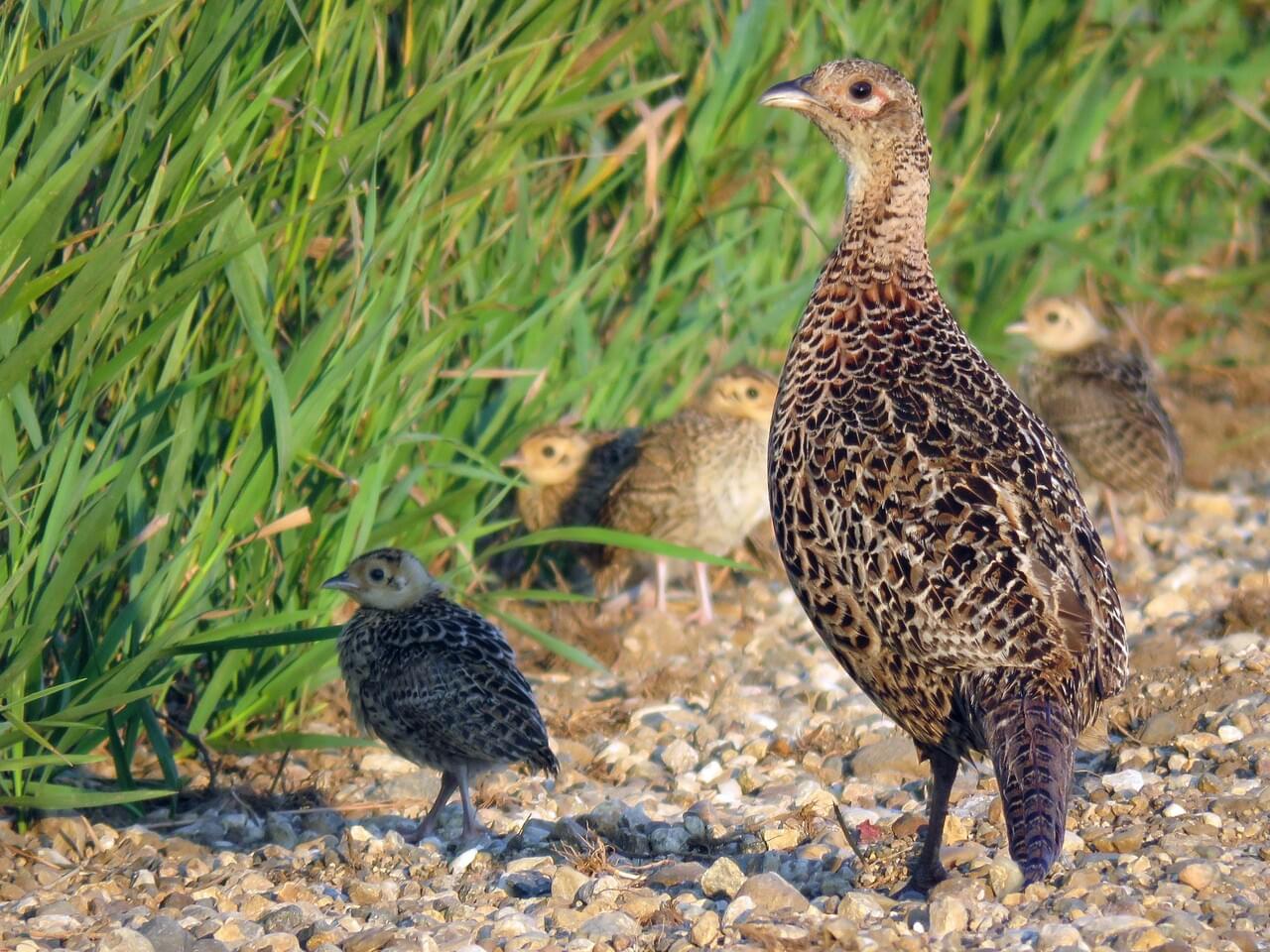
Photo by Kelly Preheim, South Dakota, July 22, 2017
The family of birds known as pheasants includes chickens, quails, peafowl, pheasants and other ground-nesting birds.