Cage-Free Commitment: A False Promise for Hens
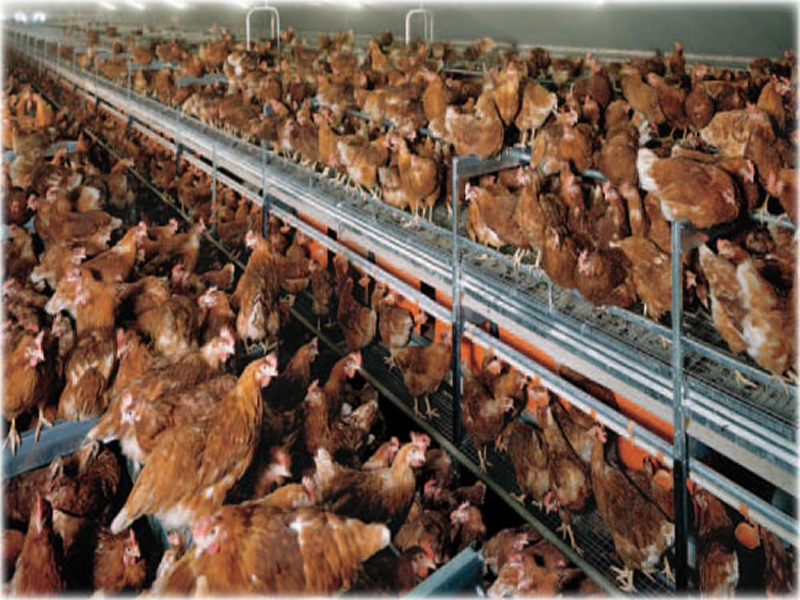
Photo of Big Dutchman “cage-free” facility
In Maine, shoppers are being told that progress is on the way. Hannaford, a major grocery chain, has announced it will sell only cage-free eggs by 2032 (“Cage-free commitment is a win for birds and Hannaford shoppers alike,” Portland Press Herald, April 8, 2026). That sounds like a victory, and it is being celebrated as one. But for the hens, it is a sentence.
This latest pledge comes after an earlier promise—to go cage-free by 2025—was quietly pushed back by seven years. The parent company, Ahold Delhaize, has now extended its timeline while offering partial targets and reassurances. This is not an isolated case. Across the United States, corporations have learned that “commitments” can be made loudly and broken softly. In the meantime, billions of birds continue to suffer.
Cage-free campaigns have been sold to the public as a moral breakthrough. No more cages, we are told. No more cruelty. But, as Karen Davis has written, “‘cage-free’ means that, while the hens are not squeezed into small wire cages, they never go outside. ‘Cage-free’ hens are typically confined in dark, crowded buildings filled with toxic gases and disease microbes… and, like their battery-caged sisters, are painfully debeaked at the hatchery.” In this system, “they can be abused and killed at will based on economic ‘necessity,’” including “the routine culling… of birds who are not gaining weight fast enough or laying enough eggs,” as “the business mentality takes over.” This is not reform—this is simply rebranding.
The deeper issue is not only what cage-free is, but also how we are being asked to accept it. Corporate pledges are voluntary. There is no law requiring a company to meet its deadline and no penalty when it fails. When timelines slip—as they so often do—companies simply revise them, reannounce them, and move on. A 2025 promise becomes a 2032 goal. Meanwhile, hens continue to be bred, confined, and killed on an industrial scale.
Why are these promises so easily broken? Because they were never anchored in ethics. They are anchored in economics. Converting facilities is expensive. Supply fluctuates. Disease outbreaks—such as avian influenza—disrupt production. When costs rise, commitments weaken. When margins tighten, animals lose. The result is predictable: companies promise faster change than they can deliver, then retreat when reality intervenes. The birds pay for that gap.
Even if every company met its cage-free pledge tomorrow, the fundamental system would remain intact: billions of sentient birds treated as units of production. Cage-free is not liberation. It is a modest adjustment within the same industrial framework. It sets a ceiling on what we are willing to imagine for animals—just enough space to turn around, not enough to live.
Real progress does not come from marketing terms or deferred promises. It
comes from confronting the system itself—from recognizing that chickens are
not commodities, not egg machines, not inventory. They are individuals.
Until we begin to question the use of animals for food—not only the
conditions in which they are used—these cycles of promise and postponement
will continue. The industry will keep announcing improvements, advocates
will keep negotiating timelines, and the birds will keep suffering, out of
sight, behind new labels.
– Liqin Cao & Franklin Wade, United Poultry Concerns
What Can I Do?
Please go egg-free. All facets of the egg industry are inhumane. Hens are gassed or electrified once they are no longer wanted. Order our informative brochure “Free-Range Poultry and Eggs: Not All They’re Cracked Up To Be.”
